
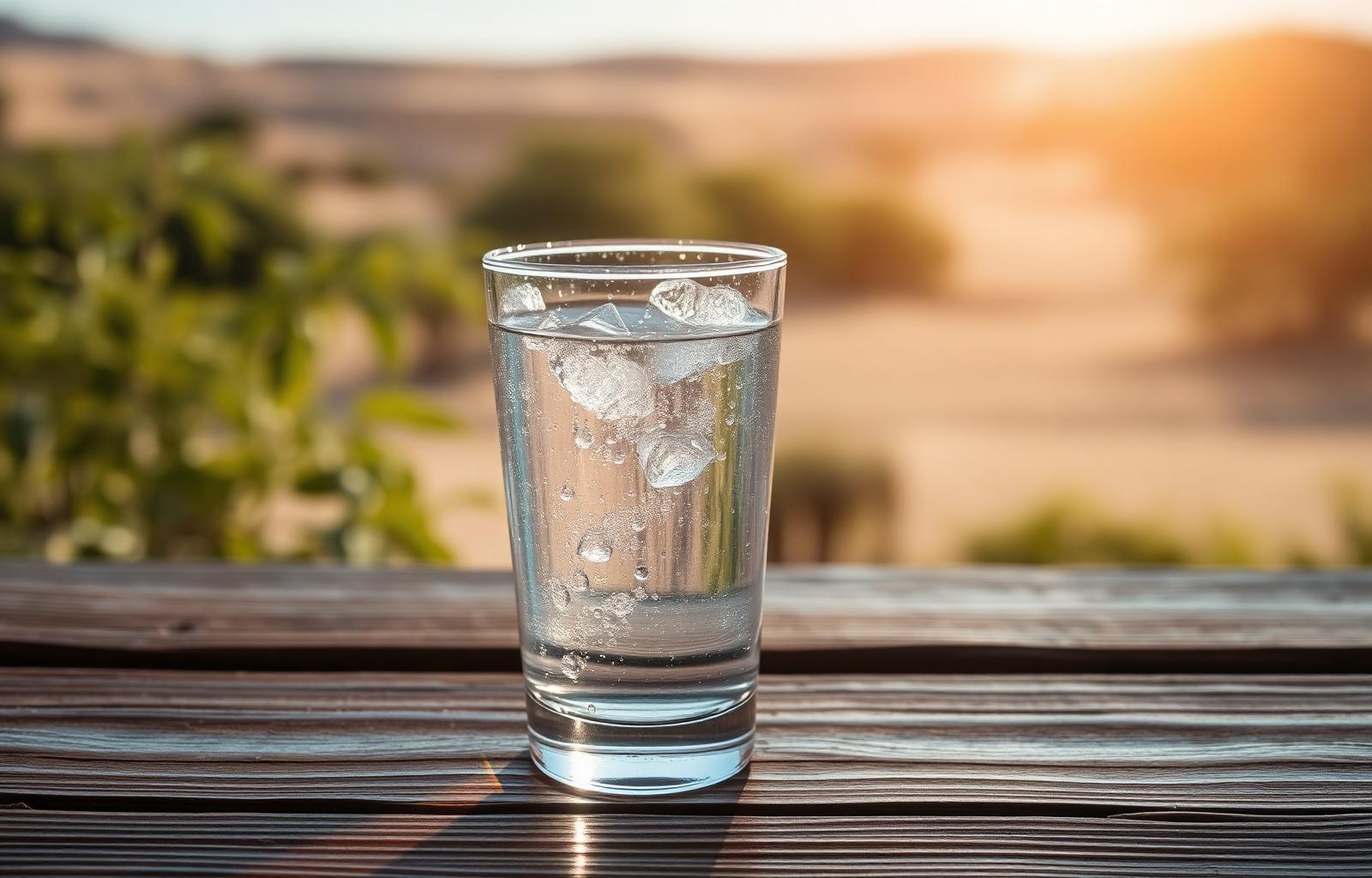
Learning how to make water from air sounds almost magical, but the science behind it is something you've seen a thousand times. Every morning, beads of dew appear on grass. Every cold drink sweats in a humid room. That's atmospheric moisture turning back into liquid water — and the same principle, scaled up, is being used everywhere from the deserts of the United Arab Emirates to backyard DIY projects across the United States.
In this guide we'll walk through the physics, the leading technologies, real-world examples, what to consider for your own home, and a popular do-it-yourself blueprint called the Air Fountain that's caught the attention of more than 40,000 households.
The Science of Pulling Water from the Atmosphere
The Earth's atmosphere holds an astonishing amount of water. According to the U.S. Geological Survey, the air around us contains roughly 3,100 cubic miles of water vapor at any given moment — more than the volume of all the rivers on the planet combined. Atmospheric water generation (AWG) is simply the practice of capturing some of that vapor and turning it into usable, drinkable water.
Condensation: The Core Principle
Air can only hold so much water vapor at a given temperature. When humid air touches a surface that's cooler than its dew point, the vapor condenses into liquid droplets. This is exactly how clouds form, how a cold soda can "sweats," and how a basic dehumidifier produces that tray of water in your basement.
Sorption: Capturing Vapor Without Refrigeration
A second method uses moisture-loving materials — desiccants such as silica gel, zeolites, and advanced metal-organic frameworks (MOFs) — to pull vapor out of the air. The material is then gently heated, releasing the water as a concentrated stream. Sorption-based systems work even in very dry air, where simple condensation isn't efficient.
How Atmospheric Water Generators Work in Real Homes
A typical home-scale atmospheric water generator combines three building blocks:
- Intake and filtration: A fan draws ambient air through a dust filter.
- Condensation chamber: Cold coils (similar to a small refrigeration loop) drop the air below its dew point so vapor turns to liquid.
- Water treatment: The condensate flows through sediment, activated carbon, and often UV sterilization before reaching a storage tank.
The result is fresh, soft, clean water — essentially distilled with optional mineralization for taste. Output ranges from 2–10 gallons per day for compact home units to thousands of gallons per day for industrial systems.
Solar-Powered Hydropanels: Sunlight + Air
Another category — sometimes called solar hydropanels — combines photovoltaic cells with a desiccant material. Sunlight heats the material to release captured water vapor, which is then condensed. Companies like Source have installed these panels in over 50 countries, and they're particularly useful in remote or off-grid locations.
Reader Resource
Curious about a simple DIY device that produces drinking water from the humidity in the air around you? Watch the free presentation.
Watch the Free Air Fountain Presentation →Affiliate link — we may earn a commission at no extra cost to you.
Why People Are Looking for Ways to Make Water at Home
Interest in atmospheric water has grown alongside a few broader trends:
- Water bills and rates: Average residential water bills in many U.S. metros have climbed steadily over the past decade.
- Off-grid living and homesteading: A reliable, independent water source is one of the building blocks of self-sufficiency.
- Emergency preparedness: FEMA's Ready.gov guidance recommends every household maintain a backup water plan; AWG units add an active source on top of stored gallons.
- Drought-prone regions: The American Southwest in particular has seen multi-year drought stretches that have prompted households to look at supplemental supply.
Methods to Make Water from Air at Home — From Simplest to Most Advanced
1. The Solar Still (Lowest Cost, Lowest Output)
A clear plastic sheet stretched over a pit lined with greenery, with a cup in the middle, will collect a few cups of water per day through evaporation and condensation. It's a textbook survival technique, but the volume is modest. Useful to understand the principle.
2. The Dehumidifier Trick
A standard residential dehumidifier extracts moisture from indoor air. In humid climates it can collect 1–4 gallons per day. The water needs filtration before drinking, and dehumidifiers are designed for comfort rather than maximum yield, but they're a great way to see condensation in action.
3. DIY Atmospheric Water Generator Blueprints
Several guides walk hobbyists through building a more purpose-built unit using off-the-shelf components: a fan, a cooling element, copper tubing, a collection basin, and a small filtration stack. The most well-known of these is the Air Fountain, a digital blueprint package created by survival writer John Gilmore.
What the Air Fountain Blueprints Include
- A complete parts list with sourcing notes for common hardware stores.
- Step-by-step assembly diagrams and wiring instructions.
- Guidance on running the unit on grid power or a basic solar setup.
- Filter and maintenance recommendations.
- Tips for placement, airflow, and maximizing daily output.
The Air Fountain is positioned as an entry-level approach for households that want to experiment with atmospheric water generation without investing in a fully assembled commercial unit. As with any DIY project, results depend on your build quality, climate, components, and adherence to local electrical and plumbing codes.
Reader Resource
Curious about a simple DIY device that produces drinking water from the humidity in the air around you? Watch the free presentation.
See the Air Fountain Blueprint Presentation →Affiliate link — we may earn a commission at no extra cost to you.
4. Commercial Atmospheric Water Generators
Brands like Watergen, Skywell, and Akvo Atmospheric Water Systems sell fully assembled countertop, floor, or outdoor units. These are turnkey: plug in, change the filters on schedule, and refill the tank from air. Pricing ranges from roughly $1,500 for small countertop models to $20,000+ for whole-home systems.
What Affects How Much Water You Can Pull from the Air
Three factors dominate yield:
- Relative humidity: Higher humidity = more vapor available. Most refrigeration-based units perform best above 40% RH.
- Air temperature: Warmer air can carry more moisture. Output typically rises in summer and falls in winter.
- Airflow: The more air the unit processes per hour, the more water it can theoretically collect. Place the unit somewhere with good ventilation.
A useful rule of thumb: at 80°F and 60% relative humidity, one cubic meter of air holds about 14 grams of water. Process a few hundred cubic meters per hour and you start collecting meaningful amounts.
What the World Is Already Doing
The Middle East and North Africa
The UAE has installed large-scale atmospheric water installations as part of its long-term water security strategy, combining traditional desalination with newer AWG and solar hydropanel deployments.
Disaster Relief and Remote Communities
Mobile AWG units have been deployed in disaster zones — from hurricane response in the Caribbean to wildfire recovery in California — to provide drinking water where infrastructure is temporarily down.
Schools and Health Clinics
Nonprofits have funded solar-powered hydropanel arrays at schools in parts of Mexico, Kenya, and the Navajo Nation to provide reliable drinking water without piping infrastructure.
A Practical 30-Day Plan to Add an Air-to-Water Source at Home
If you're new to the topic, here's a sensible roadmap:
- Week 1 — Learn: Read up on dew point, relative humidity, and how a dehumidifier works. Watch the Air Fountain presentation for one example of the DIY approach.
- Week 2 — Measure: Use a $15 hygrometer to track humidity in your home and yard at different times of day. This tells you what kind of yield to expect.
- Week 3 — Decide: Compare paths: commercial unit, DIY blueprint, or solar hydropanel. Match it to your budget and skills.
- Week 4 — Build or Buy: Source components or place an order. Plan filter replacement and storage.
Reader Resource
Curious about a simple DIY device that produces drinking water from the humidity in the air around you? Watch the free presentation.
Watch the Free Air Fountain Presentation →Affiliate link — we may earn a commission at no extra cost to you.
Maintenance, Safety, and Water Quality
Whichever path you choose, treat the water responsibly:
- Follow filter replacement schedules — typically every 3–12 months depending on the stage.
- Test the output annually with a basic home water test kit.
- Keep intake areas clean; avoid placing the unit next to sources of strong odors, smoke, or chemicals.
- Use food-grade storage containers and rotate stored water every 6 months.
- Consult a licensed electrician for any wiring work on DIY builds.
Final Thoughts on Making Water from Air
Atmospheric water generation is no longer a fringe idea — it's a practical, scientifically grounded way to add resilience to your household water supply. Whether you start with a simple dehumidifier experiment, follow a DIY blueprint like the Air Fountain, or invest in a commercial system, the underlying principle is the same one nature has used for billions of years: cool humid air, collect what condenses, and filter it for use.
If you'd like a closer look at the do-it-yourself approach thousands of households are exploring, watch the free Air Fountain presentation below.
Frequently Asked Questions About Making Water from Air
How do you actually make water from air?+
Atmospheric water generation works by cooling air below its dew point so water vapor condenses into liquid water — the same principle behind dew on grass or droplets on a cold glass. The collected condensate is then filtered to produce clean, drinkable water. Commercial atmospheric water generators (AWGs) use refrigeration coils, fans, and multi-stage filtration; DIY systems use the same physics with simpler components.
How much water can an atmospheric water generator produce per day?+
Output depends on humidity, temperature, and unit size. Small home units typically produce between 2 and 10 gallons per day, while larger commercial systems used in the UAE and Israel can produce hundreds or thousands of gallons. Higher humidity and warmer temperatures generally improve yield.
Is water from the air safe to drink?+
Condensed water from the atmosphere is essentially distilled — very pure to begin with. Most systems run the collected water through sediment, carbon, and UV or mineralization stages to remove any airborne dust and to improve taste. Following the manufacturer's filter-change schedule keeps the output safe.
What humidity level do you need to make water from air?+
Most atmospheric water generators work best when relative humidity is at least 30–40%. Some advanced systems use desiccant materials such as zeolites or metal-organic frameworks (MOFs) to pull moisture out of air as dry as 10–20% relative humidity.
How does Dubai make drinking water from the air?+
The UAE has invested heavily in atmospheric water generation and solar-powered condensation farms. Companies like Source operate solar hydropanel arrays that produce drinking water directly from sunlight and air, and government-backed projects use large refrigeration-based units to supplement desalinated supply.
Can I build a DIY water-from-air system at home?+
Yes — the core idea (cool a surface, collect condensation, filter the water) can be replicated at a hobbyist scale. Detailed step-by-step plans such as the Air Fountain blueprints walk homeowners through assembling a unit from components available at most hardware stores. Output, water quality, and reliability depend on your build, climate, and filtration choices.
What is the Air Fountain system?+
The Air Fountain is a set of DIY blueprints created by survival writer John Gilmore. It guides homeowners through building a small atmospheric water generator inspired by larger condensation systems used in arid regions. The guide includes a parts list, wiring diagram, and assembly steps. Results vary by climate, materials, and assembly — always research local water and electrical regulations before starting.
Does atmospheric water generation use a lot of electricity?+
A compact refrigeration-based unit typically draws between 300 and 800 watts while running, comparable to a small dehumidifier. Many DIY and commercial units can also be powered by a modest solar panel and battery setup, making them suitable for off-grid use.
Is water from air better than well water or tap water?+
It's different rather than universally better. Atmospheric water starts out free of groundwater contaminants like nitrates or heavy metals, but it can pick up airborne particulates, so filtration matters. Many households use AWG output as a supplement or backup to existing supplies.
Reader Resource
Curious about a simple DIY device that produces drinking water from the humidity in the air around you? Watch the free presentation.
Watch the Free Air Fountain Video →Affiliate link — we may earn a commission at no extra cost to you.
Disclosure: WattWise is an independent educational publication. Some links on this page are affiliate links, which means we may receive a small commission, at no additional cost to you, if you choose to learn more about a recommended resource. Information here is for educational purposes only; results, output, and water quality vary by household, climate, equipment, and individual circumstances. Always follow local regulations and consult a licensed professional before making changes to your home's electrical, plumbing, or water systems.